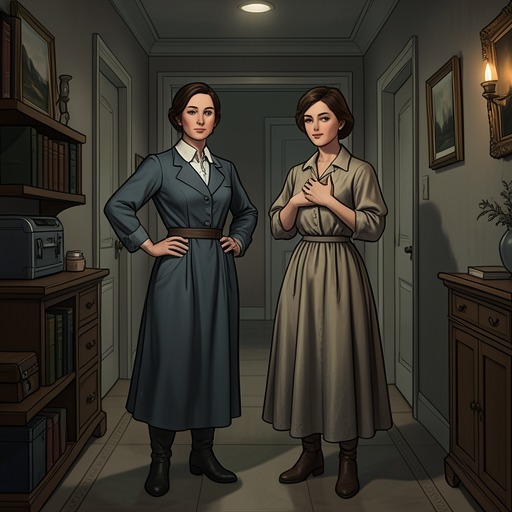
Kay’s hostility toward and jealousy of Nevile’s former wife, Audrey
Towards ZeroKay Strange’s jealousy of Audrey Strange, Nevile Strange’s first wife, turns the women’s rivalry into a conflict over who truly occupies Nevile’s life. Kay sees Audrey not merely as a former spouse but as a persistent influence: in her account, Audrey arranged the reunion at Gull’s Point, drew Nevile back toward herself, and remained a presence in the home Kay tried to make her own. The novel presents these allegations through Kay’s agitated perspective, while making the depth of her jealousy unmistakable.
The Rivalry and the Reunion
Kay tells Superintendent Battle that Audrey was responsible for Nevile coming to Gull’s Point. According to Kay, Nevile believed the visit had been his own idea, but Audrey had first planted it during a chance meeting with him in the Park. Kay interprets that apparent spontaneity as evidence of Audrey’s influence: Audrey had, she claims, made Nevile mistake her suggestion for his own plan.
Kay supplies a motive as well as an account of the arrangement. She believes Audrey wanted to regain Nevile and had never forgiven him for leaving her for Kay. In this telling, bringing them all together was not a neutral reunion but the opening move in a deliberate campaign. Kay says Audrey continued to work on Nevile after their arrival, presenting herself as pathetic and elusive and drawing attention to another man.
That other man is Thomas Royde, whom Kay describes as a faithful admirer of Audrey. Kay alleges that Audrey’s apparent intention to marry Thomas made Nevile jealous and drove him nearly mad. Battle suggests that Nevile might welcome Audrey finding happiness with an old friend; Kay rejects that reading, insisting that Nevile is intensely jealous because he remains deeply attached to Audrey. Her explanation therefore makes Audrey’s supposed power over the reunion inseparable from her interpretation of Nevile’s feelings.
A Presence in the House
Battle asks whether Kay could have objected to the arrangement when she learned of it. Kay says she could not, because an objection would have made her seem jealous. Battle answers that she was jealous, and Kay admits that the feeling had lasted from the beginning, or nearly so. The exchange turns a private suspicion into an explicit account of how Kay understands her marriage: Audrey’s place in Nevile’s emotional life has made Kay feel that she is competing even when Audrey is absent.
Kay describes that absence as a kind of haunting. She changed the colour scheme and redecorated, but these efforts did not make the house feel fully hers. Instead, she felt Audrey there, like a grey ghost moving through it. The image gives Kay’s jealousy a domestic shape: the home can be altered on its surfaces, yet Kay experiences Audrey as an ineradicable presence within it. Kay also believes Nevile felt guilty for having treated Audrey badly, and that Audrey remained a reproach in the back of his mind. These are Kay’s readings of Nevile, not an independent confirmation of Audrey’s intentions, but they explain why Kay experiences the former wife as a rival even in her absence.
Suspicion and Its Limits
Kay’s account casts Audrey as both deliberate and difficult to read. She attributes the Gull’s Point reunion, Audrey’s manner, and Audrey’s apparent closeness to Thomas to a single intention: to recover Nevile and unsettle Kay. That interpretation gives Kay a coherent explanation for the painful signs she observes, but it also reveals how completely jealousy organizes her view of events. Audrey’s actions reach the reader through Kay’s claims, and the distinction between what Kay believes and what has been established matters: her conviction alone does not prove that Audrey engineered the reunion or used Thomas to provoke Nevile.
Battle’s questioning draws attention to that distinction without dismissing Kay’s feelings. He asks whether Nevile must be fond of Audrey if her presence can make him jealous; Kay responds that Audrey has ensured it. The reply is bitter, and it places the women in an uneven contest as Kay sees it: Audrey has the power to stir Nevile’s attachment, while Kay is left to watch and interpret its effects. Her jealousy is thus not simply antagonism toward a rival, but fear that her marriage cannot displace the first wife’s emotional importance.
The Public Outburst
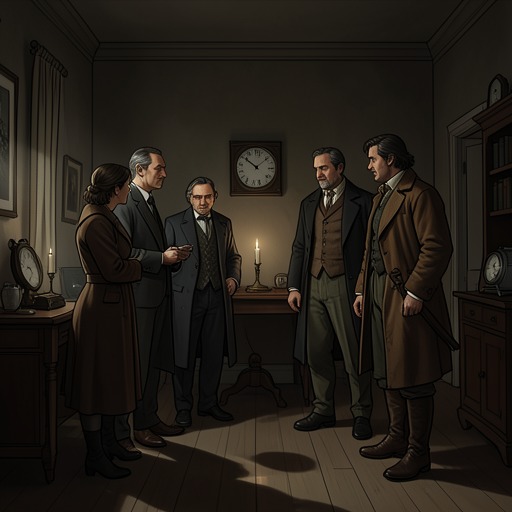
The rivalry becomes overt in the drawing-room when Kay loses control and cries to Audrey that she always knew Audrey was behind something. Mary Aldin tries to stop her, and Nevile sharply tells Kay to be quiet. Kay begins to cry; Ted Latimer comes over, urges her to regain control, and angrily tells Nevile that Kay has been under considerable strain and needs his care. The moment makes visible the distress that had previously emerged in Kay’s account to Battle as accusation, resentment, and the image of a haunting presence.
The outburst does not settle whether Kay’s suspicions about Audrey are true. Instead, it shows how completely the rivalry has shaped Kay’s experience: Audrey is the person she believes to be acting against her, while Nevile’s response leaves her feeling unsupported in front of the others. Ted’s intervention offers sympathy, but the scene ends with Kay exposed and crying, not with reconciliation or proof. Her hostility remains bound to the same unresolved question that has governed her account: whether Audrey is truly reclaiming Nevile, or whether Kay’s jealousy has made every sign of Audrey’s influence feel like a threat.